
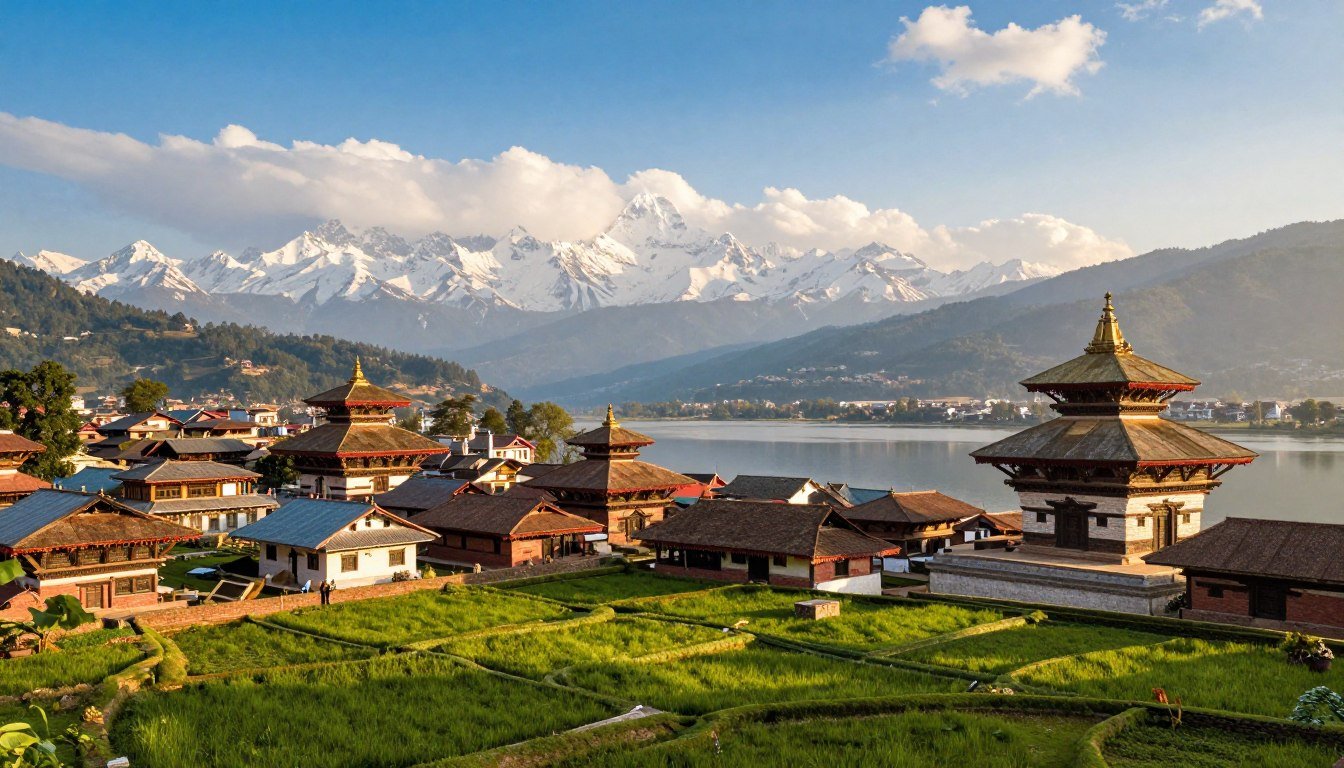
For a first trip, pair Kathmandu Valley with Pokhara, then add Chitwan or a trek only if your days and interests allow. The best places to visit in Nepal give you a mix of historic cities, mountain scenery, and subtropical wildlife without making trekking a requirement.
If you are a first-time traveler from the United States, choosing a manageable route matters as much as choosing the stops. Nepal trip planning gets easier when you decide which experience matters most, then leave enough time to enjoy it instead of spending your days in transit. This guide helps you build a route around culture, nature, or outdoor activity, with practical details for making your choices.
Key Takeaways
- Pair Kathmandu Valley with Pokhara for a balanced first visit.
- Add Chitwan National Park for a lowland wildlife experience.
- Choose a trek when mountain trails are a main reason for your trip.
- Plan around travel days as well as time at each destination.
- Check current entry and regional conditions before booking.
- Choose a few distinct experiences rather than trying to cover every region in one visit.
Table of Contents
How to Choose Places to Visit in Nepal for a First Trip
For most first-time visitors, Kathmandu Valley and Pokhara make the strongest core route, with Chitwan or a trek as a third focus. That pairing gives you a city base and a lakeside setting, while keeping the trip more varied than a single-region stay.
Choose one main addition beyond Kathmandu Valley and Pokhara: Chitwan for wildlife or the Annapurna region for trekking. Kathmandu, Pokhara, and Chitwan National Park offer three distinct experiences: city, lakeside, and wildlife. The Annapurna region adds mountain and village routes, while Bandipur and Bardia National Park can suit travelers looking for quieter towns or a less-routine wildlife stop.
| Destination area | Anchor stops | Best for | Trip style |
|---|---|---|---|
| Kathmandu Valley | Kathmandu, Patan, Bhaktapur | Culture and architecture | City base |
| Pokhara and Annapurna | Pokhara, Annapurna villages | Lake and mountain activities | Active or relaxed |
| Chitwan and the Terai | Chitwan National Park | Wildlife | Lowland nature |
| Western Nepal | Bandipur, Bardia National Park | Quieter towns and wildlife | Less-routine route |
A colorful Nepal map can help you picture how widely these broad regions are spread and why adding a far-western stop changes the shape of a trip. Use it to compare route ideas, not as a promise that neighboring-looking places are quick to reach. A destination’s position on the map is only one part of planning; the time and effort involved in getting there also matter.
For a first visit, keep the core route simple and make one deliberate choice about what to add. Travelers who care most about trails can build around the Annapurna region; travelers drawn to animals can use Chitwan as their extra focus. Leave one major region off the itinerary if adding it would turn the trip into a string of transfers.
What Should You See in Kathmandu Valley?
Start with the Kathmandu Valley: its UNESCO property brings together royal squares, temples, stupas, and historic settlements. The heritage sites are spread across the valley, so allow time to see more than one historic center rather than treating the capital as a brief stop.
Kathmandu Valley’s UNESCO property comprises seven sites: Bhaktapur Durbar Square, Boudhanath, Changu Narayan Temple, Kathmandu Durbar Square, Pashupatinath Temple, Patan Durbar Square, and Swayambhunath. Nepal has four UNESCO World Heritage properties in total: Sagarmatha National Park, Kathmandu Valley, Chitwan National Park, and Lumbini.
The three Durbar Squares are dense historic centers, each with its own cluster of palaces, courtyards, temples, and streets. Kathmandu Durbar Square’s temples, palaces, courtyards, and streets date to the 12th century. Patan and Bhaktapur offer other settings for seeing the valley’s architecture and historic urban life. The UNESCO property also includes stupas and temples beyond the squares.
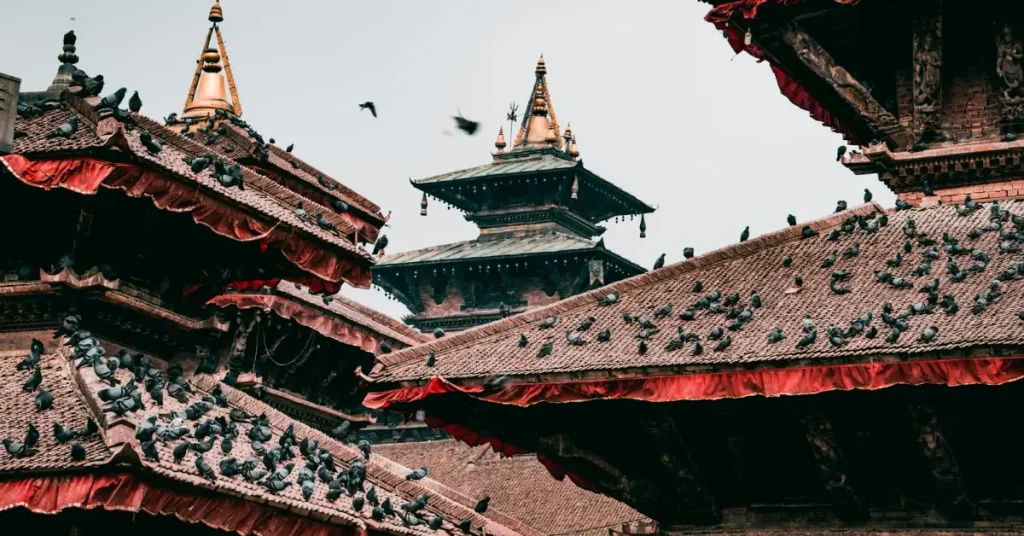
For a first visit, these five stops make a useful shortlist:
- Kathmandu Durbar Square
- Patan Durbar Square
- Bhaktapur Durbar Square
- Boudhanath
- Swayambhunath
Bhaktapur’s pedestrianized old town and Newari crafts give it a different pace from central Kathmandu. Its walkable streets reward unhurried time, especially if you want to browse local work and notice details beyond the main square. In the wider valley, the component sites are distinct destinations, not a single compact attraction. Set aside time to walk through Bhaktapur’s old town as well as the capital’s central squares.
Where Can You Experience Nepal’s Spiritual and Local Culture?
Boudhanath and Swayambhunath make Buddhist practice visible in two very different Kathmandu settings. Boudhanath’s late afternoon is especially atmospheric, as pilgrims move around the monument and prayer flags ripple above the surrounding streets.
At sacred sites, observe local practice quietly and follow the rules for visitors. A stupa is a Buddhist monument that commemorates Buddhist teachings or enshrines sacred objects. Boudhanath is a major place of pilgrimage, while hilltop Swayambhunath combines Buddhist imagery with views across the city and a stair climb of 365 steps.
Buddhist Landmarks Above and Around Kathmandu
Boudhanath rewards a slower visit: you can watch pilgrims circle the stupa and see how the surrounding neighborhood gathers around it. At Swayambhunath, the climb is part of the visit, and the view helps place the complex above the busy capital. Buddhist sites are active places of worship, not simply scenic backdrops.
Hindu Worship at Pashupatinath
Visitors can view parts of the Pashupatinath complex, but the main Pashupatinath temple is for Hindu devotees. The evening Aarti, a Hindu worship ceremony, begins at 6:30 p.m. You can observe the ceremony from the designated viewing areas without entering the main temple. Respect boundaries and any posted restrictions as people gather for worship.
Homestays, Monastery Visits, and Nepali Food
Homestays bring local life into focus through conversation and shared routines. In Panauti, a homestay connects visitors with Newar hosts; in Barauli, Tharu hosts offer a different community context. An overnight at Neydo Tashi Choeling Monastery can include morning prayers, a quiet way to experience a monastic routine rather than only seeing a site during the day.
Food offers another approachable way to connect with daily life. Try momos, dal bhat, or thukpa, and take your cue from your hosts about meal customs. Prayer flags in a hillside setting can be striking, but their meaning is more than decoration. At any sacred site, follow posted instructions and ask before photographing worshippers.
Why Add Pokhara to Your Route?
Pokhara pairs a lakeside setting on Phewa Lake with mountain scenery and a broad choice of outdoor activities. The contrast between the water, the town, and the surrounding mountains makes it a natural pause after time in the capital.
You do not need a multiday trek to enjoy mountain views from Pokhara. For active Pokhara lake activities, choose kayaking, mountain biking, or paragliding. The town can also work as a base for day hikes, so you can spend time outdoors without committing to a longer trail itinerary.
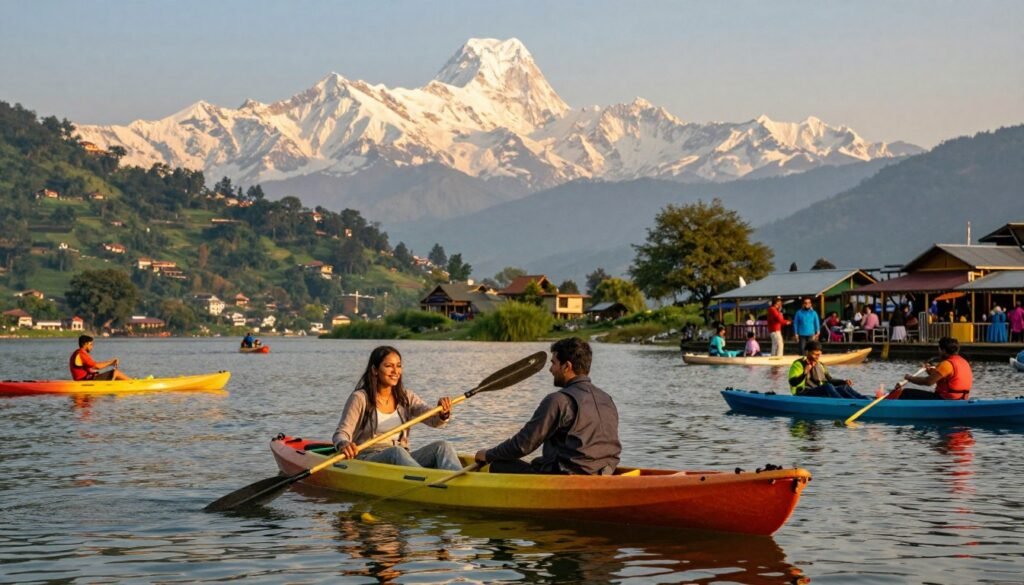
For a slower outing, consider a sunrise walk or a visit to a viewpoint. The walk to the World Peace Pagoda or Sarangkot takes about one hour, making either a manageable option when you want fresh air without filling the day with organized activities. The exact experience depends on which route and pace you choose, so leave room to linger at the destination.
Pokhara’s appeal is not only the scenery. A lakeside stop can create breathing room between sightseeing and more demanding outdoor plans. If you want to be active, combine a water activity with a short hike; if your priority is a gentler stay, use the lake and a viewpoint as the day’s anchors. Pick one active outing and one slower lakeside or viewpoint stop rather than scheduling every activity.
Which Trekking Region Fits Your Plans?
Annapurna suits a classic trekking focus, Langtang offers a national-park route, and Everest is the Khumbu option with a different permit system. Your route choice should reflect the kind of trek you want and the access rules that apply, not just the name of a famous mountain.
In most trekking regions, independent trekkers must use a licensed guide, a requirement introduced in April 2023. The Khumbu is an exception to that requirement. In 2026, foreign nationals pay NPR 2,000 per trek for a TIMS card and SAARC nationals pay NPR 1,000, though TIMS rules differ by route.
Annapurna and Langtang Routes
Annapurna offers a broad range of mountain and village trekking. Foreign trekkers on Annapurna routes need an ACAP permit costing NPR 3,000 and a TIMS card costing NPR 2,000 in 2026. Langtang is a national-park route with a distinct high-mountain setting; trekkers need a Langtang National Park permit costing NPR 3,000 and a TIMS card costing NPR 2,000.
Route-specific permit details are easier to compare side by side:
| Route | Required permits or cards | 2026 fees | Key TIMS or access rule |
|---|---|---|---|
| Annapurna | ACAP, TIMS card | NPR 3,000; NPR 2,000 | TIMS required; licensed guide in most areas |
| Langtang | Langtang National Park permit, TIMS card | NPR 3,000; NPR 2,000 | TIMS required; licensed guide |
| Everest | Sagarmatha National Park permit, Khumbu trek card | NPR 3,000; NPR 3,000 | No TIMS; Khumbu is guide-rule exception |
| Manaslu | Restricted-area permit, MCAP, ACAP | USD 75-100; NPR 6,000 | No TIMS; restricted access rules apply |
| Upper Mustang | Restricted-area permit, ACAP | USD 50 per day; NPR 3,000 | Restricted-area permit required |
Everest Region
In the Everest region, foreign trekkers need a Sagarmatha National Park permit costing NPR 3,000 and a Khumbu Pasang Lhamu Rural Municipality trek card costing NPR 3,000 in 2026. There is no TIMS requirement there in 2026. The Khumbu trek card is sold in Lukla or at Monjo. This is a separate permit system from the TIMS-based arrangements used on many other routes.
Manaslu Circuit
The Manaslu Circuit requires a restricted-area permit costing USD 75-100 for the first seven days, plus MCAP and ACAP permits costing NPR 6,000. TIMS is not required there in 2026. Because the total includes fees in both currencies, budget for the route’s different permit components rather than treating it as a single charge.
Other Restricted-Area Routes
Restricted-area permit costs differ across the other named routes. Upper Dolpo costs USD 500 for 10 days, plus a Shey Phoksundo National Park permit costing NPR 3,000. Lower Dolpo costs USD 20 per week, with the same park permit fee. Kanchenjunga costs USD 20 per week, plus a Kanchenjunga Conservation Area permit costing NPR 2,000. Solo trekkers with a licensed guide can obtain restricted-area permits since March 22, 2026.
Fees may involve both USD and NPR, and the exact combination depends on the route. Restricted-area permit rules and local access arrangements can change the practical planning for a trek, so confirm requirements for your exact route before departure. Arrange the required licensed guide and permits before setting out, especially for a restricted-area trek.
Where Can You See Nepal’s Wildlife?
Chitwan National Park is the most straightforward wildlife stop to pair with a classic first Nepal route. Its lowland setting gives you a contrast with the cities and mountain scenery, and it is an accessible choice if wildlife is a priority.
Jeep and boat outings offer ways to explore Chitwan, but no animal sighting is guaranteed. Established in 1973 as Nepal’s first national park, Chitwan is home to Bengal tigers and one-horned rhinos. Guided outings let you look for wildlife while learning about the habitat, with the experience shaped by what animals are active and visible during your visit.
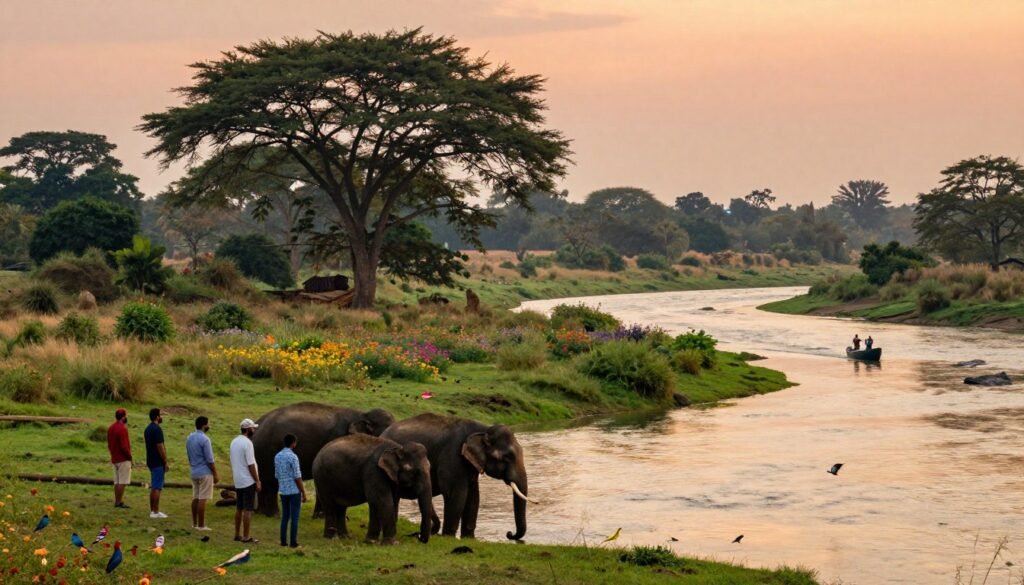
Animals and birdlife you may encounter include:
- One-horned rhinos
- Bengal tigers
- Deer
- Crocodiles
- Peacocks or other birds
Chitwan fits most easily into a route that already includes Kathmandu or Pokhara, while Bardia National Park is another wildlife destination for travelers exploring farther west. Bardia can suit a longer or less-routine journey, but its location changes the route and the time required. Decide whether the additional travel makes sense for the trip you have planned, rather than choosing a park based only on a wish list of animals.
Habitat, careful observation, and a knowledgeable guide are valuable parts of a wildlife outing even when a particular animal stays out of view. Choose a safari for the habitat and guide-led experience, not on the promise of seeing a particular animal.
What Are the Best Stops Beyond the Main Circuit?
For a slower extension, choose a village stay or the Panauti-to-Sanga hike; for a more distant trip, consider Bandipur or Lumbini. These quieter stops work best when they add a different pace or setting, rather than another name on an already full route.
Allow three to four hours for the Panauti-to-Sanga day hike. The route follows local roads and hillside paths through farmland, with Himalayan views along the way. Bandipur is a historic hill town on a former trade route to Tibet, offering a different feel from the better-known city and lakeside stops.
Homestays also give you a reason to pause. Panauti is associated with Newar hosts, while Barauli homestays connect visitors with Tharu hosts. The community contexts are distinct, so choose the stay that fits the kind of local experience you hope to have rather than treating the two villages as interchangeable overnight stops.
Travelers interested in a monastery visit can stay overnight at Neydo Tashi Choeling Monastery, which has about 200 monks. Overnight guests can join the 5 a.m. prayers. Lumbini is a distinct heritage destination and can be rewarding for travelers who have enough time to make a separate visit, but it does not need to fit every short first itinerary.
A village visit or hill-town stay feels most worthwhile when it is more than a quick overnight between longer transfers. Add a quieter stop only when you can give it enough time to feel distinct from a transit break.
When Is the Best Time to Visit Nepal?
For many trekkers, autumn and spring are the easiest seasons to plan around, while elevation changes the experience. Autumn is the clearest choice for many trekking and sightseeing plans, with spring another strong option for trails and outdoor activities.
Conditions vary by elevation, so weather that works in Kathmandu may not suit a high mountain route. Use the season that matches your main activity, then check conditions in the specific region you plan to visit.
| Season | Months | Typical conditions | Good fit |
|---|---|---|---|
| Autumn | September-November | Clear skies and stable weather | Trekking and sightseeing |
| Spring | March-May | Longer days, comfortable temperatures, blooming rhododendrons | Trekking and outdoor activities |
| Monsoon | June-early September | Heavy rain and difficult mountain travel | Flexible lowland plans |
| Winter | December-February | Colder temperatures, especially at elevation | Lower-elevation sightseeing with warm layers |
Nepal autumn trekking is popular because clear skies and stable weather generally make mountain travel easier from September to November. Spring runs from March to May, with longer days, comfortable temperatures, and blooming rhododendrons. Those conditions can make the season appealing for trekking and other outdoor activities.
Monsoon runs from June to early September. Heavy rainfall can make mountain travel difficult and trails inaccessible, so keep plans flexible if you travel then. Winter lasts from December to February, when temperatures can drop significantly, especially at higher elevations. Nepal spring travel may suit a mountain itinerary, while a lowland route can offer a different seasonal experience. Check conditions for the specific region and route close to departure.
What Should U.S. Travelers Prepare Before Departure?
U.S. travelers can obtain a Nepal tourist visa on arrival, but the pre-arrival barcode is only one step in the process. Budget separately for the visa fee, and keep the entry process distinct from completing the online form.
The online visa barcode is valid for 15 days and does not replace payment of the visa fee. The following details help you prepare for entry, safety, and domestic flights.
Visa and Entry Steps
A U.S. citizen can obtain a multiple-entry Nepal tourist visa on arrival for USD 30 for 15 days, USD 50 for 30 days, or USD 125 for 90 days. Children under 10 receive a free tourist visa, though paperwork is required. You can apply for the online pre-arrival barcode, but it does not cover the visa charge.
Extensions are available in Kathmandu or Pokhara. The maximum stay is 150 days per calendar year, and an extension costs around USD 45 per 15 days. Keep the barcode available for arrival and plan for the visa payment as a separate expense.
Safety, Insurance, and Current Conditions
The U.S. State Department’s August 31, 2026, advisory for Nepal is Level 2: Exercise Increased Caution, citing civil unrest and natural disasters. It says not to travel to the Rasuwagadhi-Timure-Syafrubesi area of Rasuwa district, including the Nepal-China border crossing, because of flood damage and risks of further flooding and landslides.
The advisory notes that monsoon runs from June to September and heavy rain can cause flash floods and landslides. It recommends travel insurance that includes medical evacuation coverage. The current Nepal travel advisory is a useful check when you are preparing for departure, particularly if your plans include travel near affected areas.
Domestic Flight Baggage Rules
Airline baggage limits differ by carrier and fare. Buddha Air allows one cabin bag per passenger, limited to 5 kg and 55 cm x 40 cm x 20 cm. Its free checked-baggage allowance ranges from 15 kg to 25 kg depending on fare class. Nepal Airlines’ checked-baggage allowance on Kathmandu-Delhi economy flights ranges from 20 kg to 25 kg depending on fare class, with a maximum permitted checked-baggage weight of 32 kg per piece. Buddha Air’s cabin-bag limit is specific to that airline, so do not assume it applies to another carrier.
Use this departure checklist:
- Save the visa barcode.
- Budget separately for the visa fee.
- Confirm the operating airline’s baggage allowance.
- Keep essential medication and a change of clothes in the cabin bag.
- Check the current advisory and local conditions.
If baggage is lost, misplaced, or damaged on a Buddha Air flight, report it and complete a Property Irregularity Report before leaving the airport premises. Before leaving an airport after a baggage problem, complete the required Property Irregularity Report with the airline.
How Can You Turn These Stops Into a Workable Route?
A workable first itinerary starts with Kathmandu Valley and adds one main region, not every tempting stop. One clear theme helps you choose between a lakeside stay, wildlife, or dedicated trekking without sacrificing time to constant transfers.
As a rule of thumb, about 7-10 days can focus on Kathmandu Valley plus either Pokhara or Chitwan. Adding both Pokhara and Chitwan is more realistic with additional days, and a trek needs dedicated time beyond city sightseeing.
Use this four-step framework to shape a first Nepal itinerary:
- Choose one main trip theme, such as culture, wildlife, or outdoor activity.
- Select one primary region beyond Kathmandu.
- Add a nearby extension only if travel days allow.
- Preserve a flexible block for weather or delays.
Begin in Kathmandu and allow time for the valley. From there, choose Pokhara for lakeside and mountain activities or Chitwan for wildlife. Add a trek or village stop only if the trip has enough days to make the extra travel worthwhile. This framework leaves room to adjust the details without treating every destination as essential.
Seven to ten days is a planning rule of thumb, not a promise that every named destination fits comfortably. A trek is its own focus, not a small add-on to a sightseeing schedule. Nepal itinerary planning works better when you account for travel days and preserve some flexibility, rather than counting only the nights spent at each stop. Keep the final route simple enough that an unexpected delay does not erase the experience you came to have.
Conclusion
A first Nepal trip works best when it has one clear focus and room to experience each stop. You can have a rewarding visit without trekking: pair cultural time with a lakeside, wildlife, or mountain experience that suits your interests and available days.
A focused route is easier to plan than a countrywide sweep, and it gives you time to notice what makes each place different. Sketch a route around the experience you most want, then check current entry and regional conditions before booking.