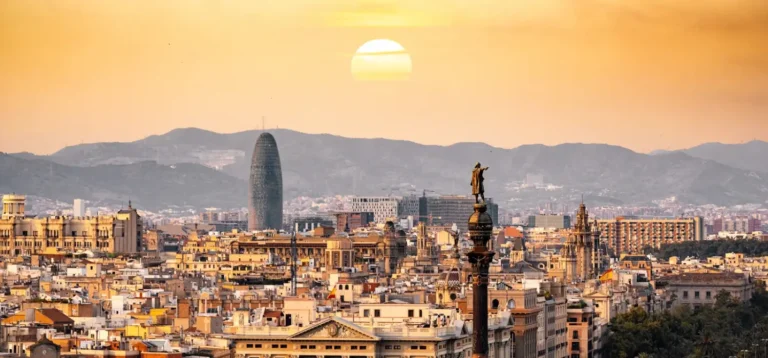
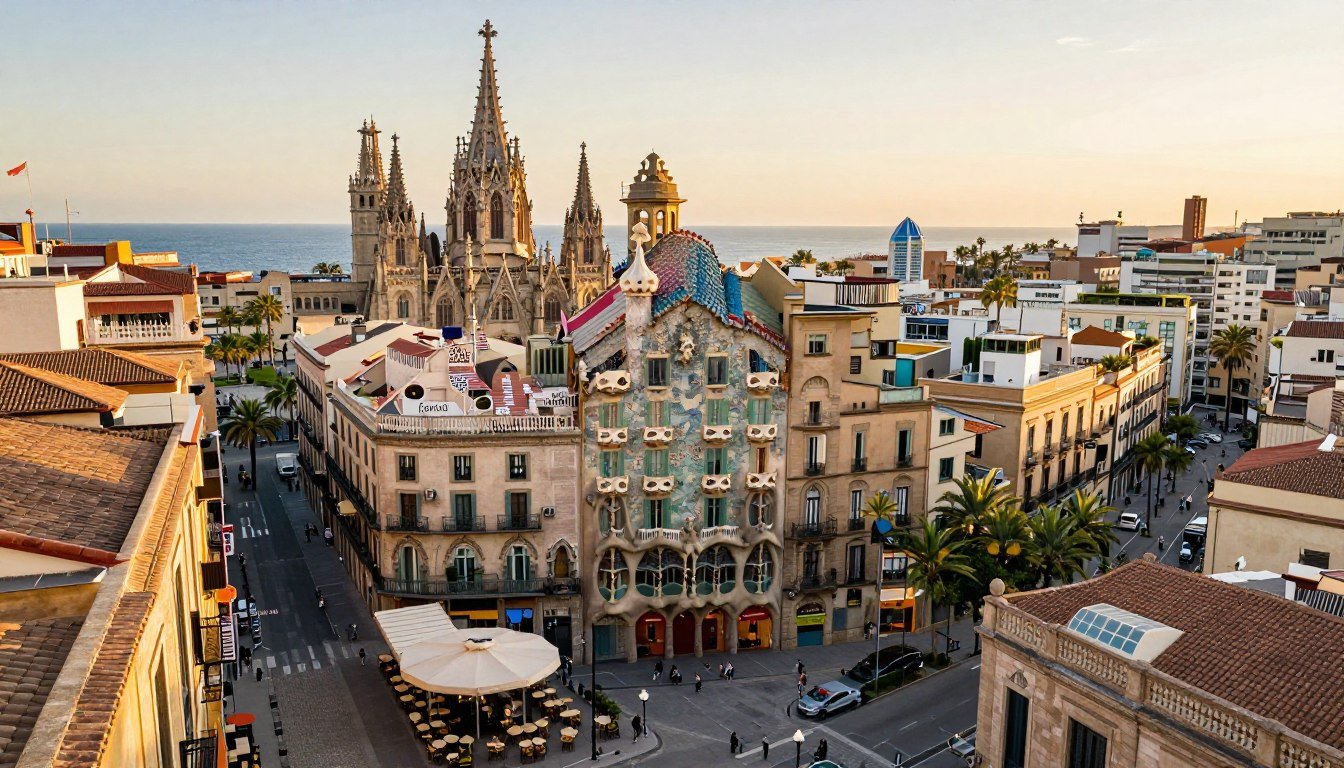
For a first visit, the strongest mix is Gaudí architecture, the Gothic Quarter, a market meal, and time by the water. Barcelona rewards a trip that balances landmark visits with unhurried wandering, since the city’s neighborhoods and attractions are spread across distinct areas. A time slot is the scheduled ticket-entry time assigned to a visitor, and appointments like these can shape how much you fit into a day. This practical mix makes Spain travel and Europe travel feel manageable even when your first-time visitors’ wish list is long. Choose a place to stay that puts at least one planned stop within an easy walk.
Key Takeaways
- Prioritize a few major sights instead of racing across the city.
- Allow time for both indoor visits and outdoor wandering.
- Build your days around timed-entry appointments.
- Leave room for a market stop and a meal at your own pace.
- Choose lodging within an easy walk of at least one planned stop.
Table of Contents
Best Things to Do in Barcelona Spain for First-Time Visitors
If you have time for only one major Gaudí visit, choose Sagrada Família for its monumental interior and Park Güell for an outdoor architectural landscape. The difference is the setting: the basilica draws your attention upward inside a vast, light-filled space, while the park puts mosaics, paths, and viewpoints in the open air. Both are major Barcelona attractions, but they give you distinct experiences.
Reserve a time slot for either landmark before shaping the rest of your day. A time slot is the scheduled ticket-entry time assigned to a visitor. For 2026, an individual Sagrada Família ticket with the audioguide app costs €26,00; a guided-tour ticket costs €30,00. A ticket with tower access costs €36,00, or €40,00 with a guided tour. Children under 11 enter free.
Sagrada Família’s architecture and interior
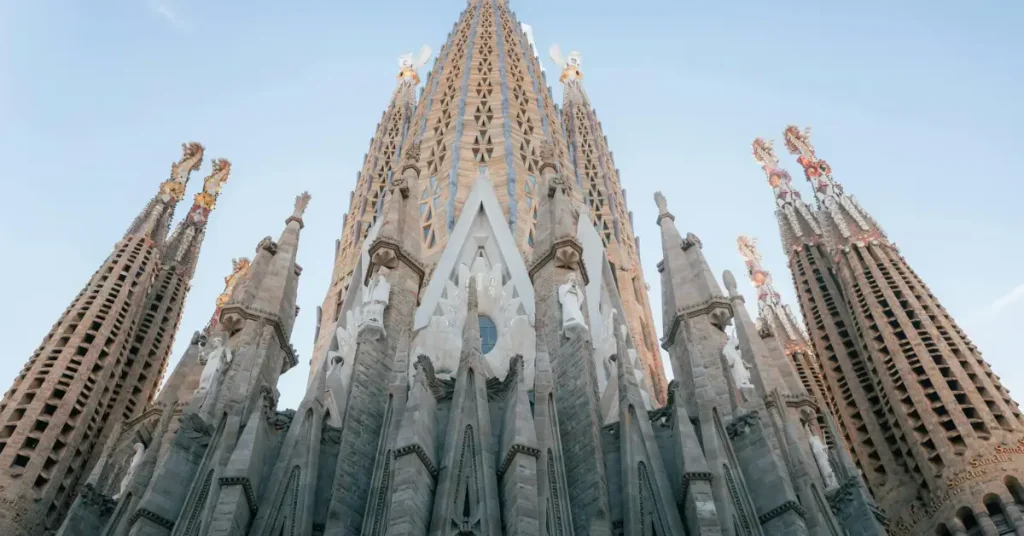
Sagrada Família is the stronger choice if you want to spend time inside an ambitious architectural work rather than move between outdoor features. Its soaring columns and branching forms make the interior feel unlike a conventional church, and daylight gives the space a changing character. The audioguide app lets you explore at your own pace; a guided tour is an option if you prefer a guide to shape the visit. Tower access adds a separate perspective, but it costs more than entry to the basilica alone.
Set aside enough time to experience the interior without making the visit a quick pass through a checklist. The basilica works especially well as the anchor for a day when you plan to explore nearby streets or another indoor attraction, rather than trying to squeeze several distant neighborhoods into the same stretch of time.
Park Güell’s mosaics and viewpoints
Park Güell combines architectural details with terraces, garden paths, and views across Barcelona. It suits you if you would rather spend time outdoors, although uneven paths and slopes make comfortable shoes useful. For 2026, a general ticket costs €18; children ages 0-6 enter free, and children ages 7-12 pay €13,50. Park Güell tickets use assigned time slots, and you may enter the restricted area up to 30 minutes after the start time on your ticket.
That entry window is a real limit, not an invitation to arrive whenever it suits you: a late arrival beyond 30 minutes can mean losing access. Once you leave the restricted area, you cannot re-enter. At Park Güell, plan to stay inside the restricted area for the full visit because leaving ends your entry.
Which Barcelona Buildings and Museums Deserve a Ticket?
Casa Batlló is the stronger pick for an immersive Modernist interior, while the Picasso Museum suits visitors who want to spend time with the artist’s work. Choose by the kind of visit you want: Casa Batlló is a self-contained experience inside one distinctive building, while the museum is a collection that rewards a slower look. Both add variety to a trip focused on Barcelona museums and architecture.
Casa Batlló’s general visit takes about 1 hour 15 minutes, while the Picasso Museum is closed every Monday. Casa Batlló general-visit tickets start at €29 in 2026, and children ages 0-12 enter free. Its listed hours are 9:00 a.m. to 7:15 p.m. every day of the year. The museum is open Tuesday through Sunday from 10:00 a.m. to 7:00 p.m.
Casa Batlló gives you a guided path through the building’s rooms and architectural details, so it is easier to plan as one contained stop. At the Picasso Museum, you move through works from different periods and can spend more or less time with the collection according to your interest. The museum’s online general admission is €12, while a ticket bought at the ticket office costs €13. Visitors under 18 receive free admission.
The museum also has several free-entry opportunities: the first Sunday of each month, Open Door days, and Thursdays from 4:00 p.m. to 7:00 p.m. Free-entry reservations are required, and they become available four days before the visit from 10:00 a.m. The 2026 Open Door dates include February 12, May 17, and September 24.
| Picasso Museum admission option | Price | Who or what it applies to |
|---|---|---|
| Online general admission | €12 | General admission |
| Ticket-office general admission | €13 | General admission |
| Visitors under 18 | Free | Visitors under 18 |
Free-entry dates can be popular, so treat a reservation as part of the plan rather than assuming you can walk in at the preferred hour. The regular admission options are simpler if your schedule is fixed or if you want to visit on a day without a free-entry period. Check the Picasso Museum’s Monday closure before fixing the date of a visit.
How Can You Get Around Barcelona Without Wasting Time?
The Hola Barcelona Travel Card is the practical choice for repeated city transit, but the Montjuïc Cable Car requires a separate ticket. Think of them as separate services: the card covers public transit across a defined set of networks, while the cable car is a specific ride to the mountain. Picking the card’s duration to match your days of frequent travel can simplify a Barcelona travel guide’s busiest logistics.
The Hola Barcelona Travel Card gives you unlimited public-transport journeys for 24, 48, 72, 96, or 120 consecutive hours from first validation. It includes one outbound and one return metro journey between the airport and Barcelona city center. Covered services include the metro, TMB buses, NitBus, the Montjuïc funicular, FGC Zone 1, trams, and Rodalies de Catalunya Zone 1.
The travel card does not cover the Montjuïc Cable Car, so a cardholder still needs to pay separately for that ride. Children under 4 travel free on public transit with the card. If your plans involve frequent city trips, its consecutive-hour periods may fit better than paying for each journey individually; if you expect to walk most of the time, a shorter period may be enough.
The cable car has its own fare choices and purchase conditions. A return ticket must be used on the same day. The one-way ticket can only be bought at the ticket office, so it is not interchangeable with the card or its airport metro journeys.
| Cable car ticket | Fare | Purchase or use condition |
|---|---|---|
| Adult return | €19.00 | Same-day use |
| Child return ages 4-12 | €13.00 | Same-day use |
| Adult one-way | €12.00 | Ticket office only |
| Child one-way | €10.00 | Ticket office only |
Children under 4 ride the cable car free. When you compare a travel card with a cable car ticket, count the services separately: one handles citywide journeys, while the other pays for a particular lift up the hillside. If your plan needs a one-way cable car ride, buy that ticket at its ticket office.
What Should You See in the Gothic Quarter?
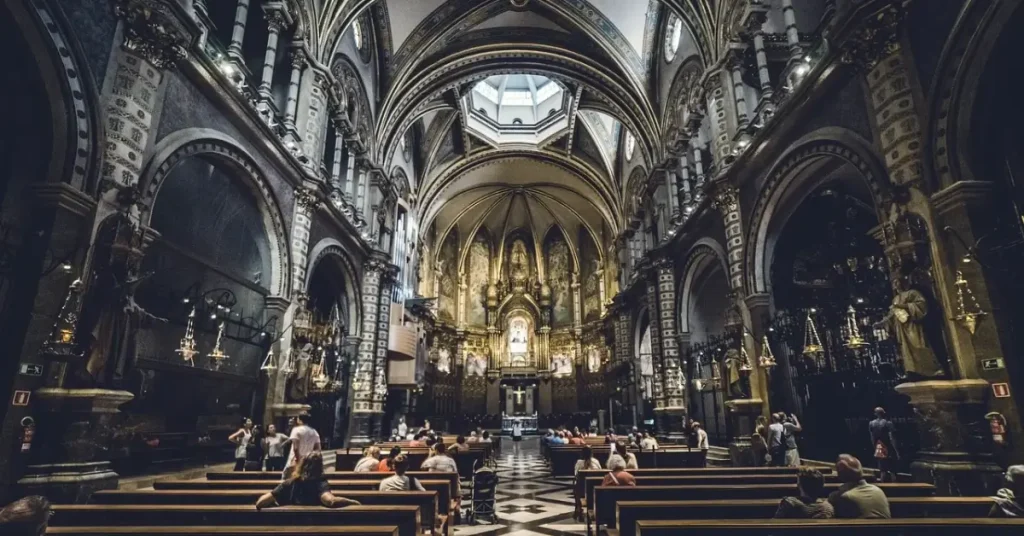
The Barri Gòtic is best explored on foot, with a short list of landmarks and enough time to follow a side street. Let the lanes set the pace: small squares and layers of architecture make the Gothic Quarter more than a route between photo stops. A compact walk gives you room to notice details that disappear when you hurry from one marked point to another.
Pick a few landmarks, then leave time to wander between them. The quarter’s narrow lanes can make it easy to lose your sense of direction, but the nearby squares offer natural pauses and useful reference points. Barcelona Cathedral and the Roman walls reveal different layers of the historic center, while the two plazas bring distinct moods to a short walk.
- Barcelona Cathedral: Pause to take in its imposing Gothic façade and the busy square outside.
- Plaça del Rei: Notice the enclosed square and the historic buildings that frame it.
- Plaça Reial: Step into a livelier, open plaza lined with arcades and palm trees.
- The Roman walls: Look for surviving sections that show how much older the city’s foundations are.
Plaça del Rei is a useful moment to slow down: its enclosed shape feels quieter than the streets around it, and the surrounding architecture gives you a sense of how the quarter developed over time. From there, you can explore a side lane, find another small square, or return toward a broader street without turning the outing into a rigid route.
El Born sits next to the Barri Gòtic, but it is a neighboring area, not another name for the Gothic Quarter. That distinction helps when you are choosing where to continue your walk or arranging a meeting point. The two areas can fit into one outing, but recognizing their separate identities keeps your directions and plans clear. Use Plaça del Rei as a clear anchor when navigating the quarter’s narrower lanes.
Where Can You Find Barcelona Markets and Tapas?
For a quick taste of the city, start at La Boqueria; for another market stop, consider Mercat de Santa Caterina. La Boqueria is especially central and easy to work into a visit near the historic center, while Santa Caterina gives you another place to browse food stalls and local produce. A market can be a lively tasting stop without becoming a full restaurant meal.
Market stalls are not all sit-down restaurants, so plan a market visit as browsing and tasting. At Mercat de Sant Josep de la Boqueria, commonly called La Boqueria, you can look over produce and prepared bites in a busy, visitor-friendly setting. Mercat de Santa Caterina is a good alternative if you want another market atmosphere rather than returning to the most central option.
A market stop can be brief: choose a small bite, pause to take in the stalls, then continue with your day. Tapas works differently. Several plates shared at a table turn food into a longer meal, and ordering a few different dishes gives everyone a chance to sample more than one flavor.
- Patatas bravas: Fried potatoes served with a savory sauce, a familiar choice for sharing.
- Pan con tomate: Bread rubbed with tomato and seasoned simply, often ordered alongside other plates.
- Tortilla española: A Spanish omelet with potato, served in a wedge or smaller portion.
- A seasonal market snack: Choose a fruit, pastry, or prepared bite that looks appealing at the stall.
Those dishes are easy starting points rather than a fixed checklist. At a market, a seasonal snack lets you try something without setting aside a full meal; in a tapas bar, a few plates turn the meal into an occasion. If you are hungry, share several dishes and add more as you go instead of expecting one plate to function like a large entrée. Order a few plates to share rather than treating tapas as a single large entrée.
Which Barcelona Beaches Are Worth a Visit?
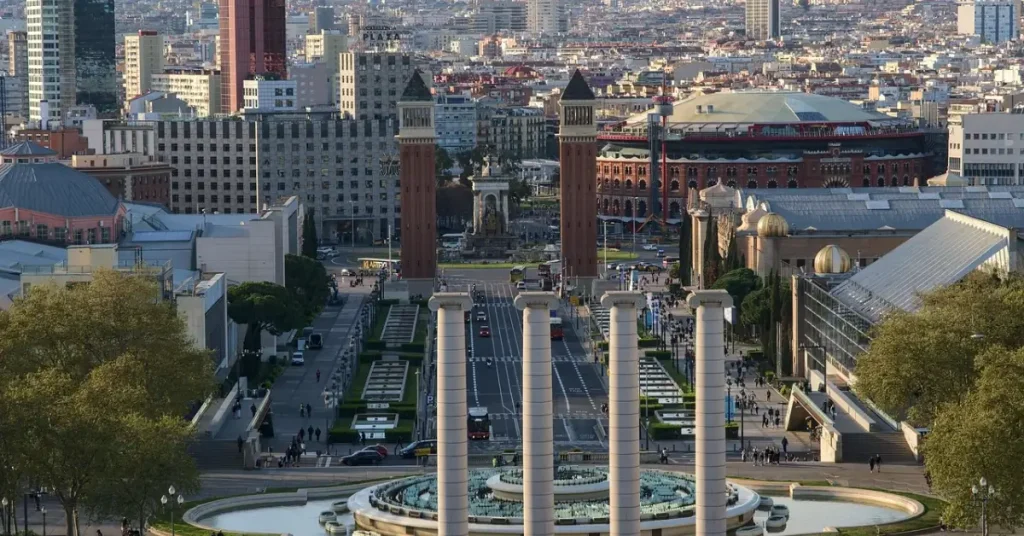
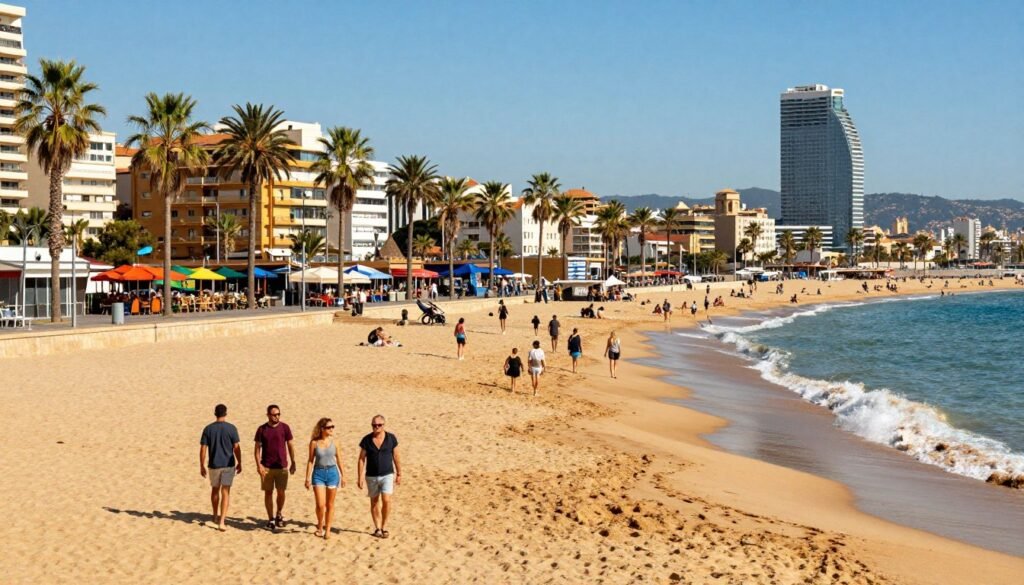
Barceloneta is the most central choice, while Bogatell and Nova Icària offer alternatives along the city’s beach zone. Choose by convenience and mood: Barceloneta is an easy pick when you want the waterfront close to central sights, while the other two give you more options along the coast. Each can make a beach break part of a city visit without requiring a separate trip away from Barcelona.
Seasonal water-quality ratings describe monitoring over time, not guaranteed conditions on the day you swim. Spain’s swimming-water quality data was last updated in June 2026 and covers the 2025 season. The ratings are Excellent, Good, Sufficient, or Poor, based on microbiological measures including intestinal enterococcus and Escherichia coli, along with macroscopic indicators.
The monitoring schedule gives useful context for understanding those seasonal ratings. Spain’s swimming-water monitoring normally includes at least eight samples during a season and one preliminary sample before the season. No more than 30 days should pass between samples. These checks describe a pattern across a period, not a live reading for the hour you arrive.
| Monitoring item | Requirement | Timing |
|---|---|---|
| Seasonal samples | At least 8 | Across the season |
| Preliminary sample | 1 | Before the season |
| Maximum interval | 30 days | Between samples |
The four ratings summarize the condition of the water based on those measures: Excellent is the strongest category, followed by Good, Sufficient, and Poor. They are useful for comparing seasonal results, but they cannot tell you whether the water is suitable for swimming at the exact time of your visit. Rain, local conditions, and other changes can affect what you find at the shore.
Choose a beach that works with the rest of your day, then make your decision about entering the water on site. Pay attention to the information posted where you arrive rather than treating a seasonal classification as a real-time beach report. Check the beach’s posted flags and local notices on the day you plan to swim.
What Can You Do on Montjuïc Beyond the View?
Montjuïc is worth setting aside time for if you want a mix of hilltop views, history, and major cultural sites. It is a broad hillside, not one compact attraction, so your experience depends on which cluster you choose. The mountain can fill a half-day with a focused visit, or longer if you plan to combine separate stops at an unhurried pace.
Choose a small group of nearby sights rather than assuming every stop is adjacent. Montjuïc Castle, the Olympic Stadium, and the National Art Museum of Catalonia (MNAC) are distinct places on or beside the hill. They offer different reasons to go: historical context, a look at Olympic venues, or time with a major art collection.
Montjuïc Castle and the hill’s history
Montjuïc Castle is a useful choice if you want history alongside an elevated view of Barcelona. Its position makes the city’s layout easier to read from above, including the relationship between the built-up center and the coastline. Give yourself time to notice the setting as well as the site itself; rushing straight to a viewpoint misses some of the reason to visit.
The hill’s past is not confined to one building, so a castle visit can work well as a focused history stop rather than an attempt to cover every era or site. Think about whether you want a slower visit centered on the castle or a day built around art and sports venues instead.
Olympic sites and art on the hillside
The Olympic Stadium offers a different kind of visit, with space to consider Barcelona’s sporting legacy and the scale of a major venue. MNAC is the art-focused option, giving you a museum visit rather than an outdoor history walk. These stops do not serve as interchangeable viewpoints: choose the stadium for its Olympic associations and the museum when you want to spend time with art.
Because attractions are spread across a large area, check their locations against one another before setting your route. A tightly focused group makes for a more comfortable day than bouncing between separate corners of the hillside. Pick one cluster of Montjuïc sights before setting out, rather than trying to cover the whole hill in a rushed visit.
What Tourist Tax Will You Pay in Barcelona?
From April 1, 2026, Barcelona’s tourist-tax rate depends on the type of accommodation you book. The nightly amount is category-based: five-star hotels and equivalent establishments have a different rate from four-star hotels, tourist-use residences, and other establishments. The tourist tax can add a noticeable line to your lodging bill, especially across several nights.
From April 1, 2026, the listed rates are €12,00 for five-star hotels and equivalents, €8,40 for four-star hotels and equivalents, €9,50 for tourist-use residences, and €7,00 for other establishments. These are the accommodation-based tourist-tax rates, so the property category matters when you estimate the total cost of your stay.
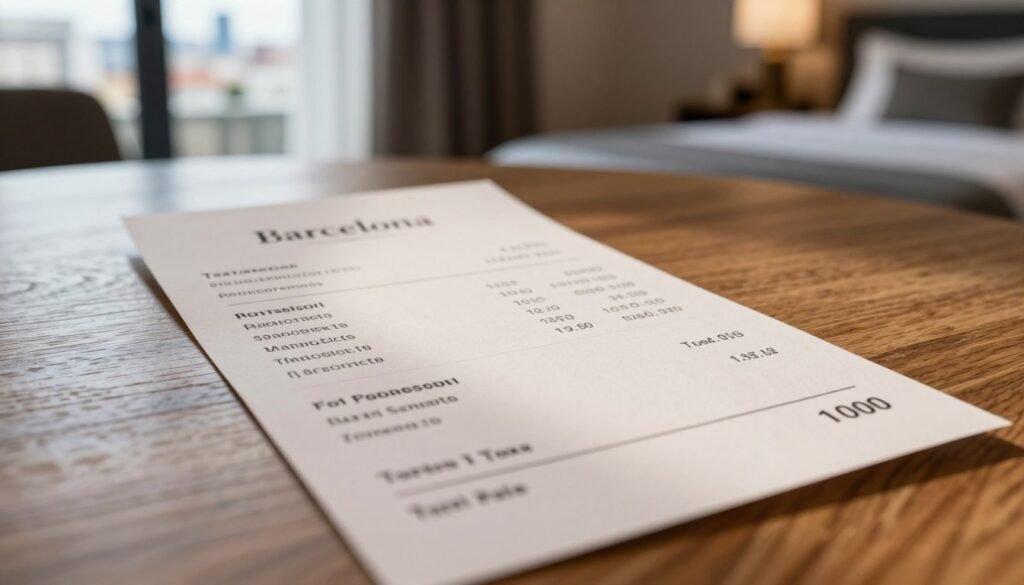
The surcharge is a separate part of the calculation, not another name for the rates listed above. Barcelona’s tourist-tax surcharge is capped at €5 from April 1, 2026, and is scheduled to rise gradually to €8 in 2029. Keeping the base rate and surcharge distinct makes it easier to understand the total shown for your accommodation.
Some travelers are exempt under Catalonia’s rules. People age 16 or younger do not pay the tourist tax. Exemptions also cover stays for documented health reasons, including stays by accompanying persons. These are specific categories, so do not assume that every family stay or medical appointment automatically qualifies without the relevant documentation.
When comparing places to stay, look at the accommodation category as well as the room rate. The tourist tax may be collected as part of the bill or presented as a separate item, so the listed nightly price alone may not show the full amount due. Check the final accommodation bill to see how the tourist tax and surcharge are itemized.
How Should You Shape a First Barcelona Itinerary?
With one day, keep the plan to a compact city-center loop; with two or three, spread the major visits across separate days. Geography matters more than a packed checklist: a realistic Barcelona itinerary groups nearby stops, so you spend less of your limited time crossing the city. A first Barcelona trip feels more relaxed when each day has one clear focus.
Leave room for a slower meal or an unplanned pause instead of scheduling every hour. A one-day route can cluster the Barri Gòtic, Plaça Reial, and La Boqueria. With two or three days, separate the historic center, Gaudí visits, and waterfront time so each area gets the attention it deserves.
A focused one-day route
Start with a walk through the Barri Gòtic, using its squares as pauses rather than treating the neighborhood as a quick corridor. Continue to Plaça Reial, then fit in La Boqueria for a tasting stop or meal. This route keeps the day centered instead of asking you to travel between distant attractions. If you have a timed visit elsewhere, build the rest of the day around that appointment rather than trying to preserve the loop at all costs.
One day is enough to get a feel for the old town and enjoy a meal, but not to experience every major sight. Choose the part of Barcelona you most want to remember and let that decision determine what you leave for another trip.
A more balanced two- or three-day route
For two days, give one day to the historic center and another to a Gaudí visit with nearby plans. For three days, set aside a separate stretch for the waterfront or a focused visit to Montjuïc. This keeps the city’s different experiences from competing for the same afternoon and cuts down on repeated cross-town journeys.
- Group stops by neighborhood so each day has a clear geographic focus.
- Reserve timed-entry visits before setting the day’s route.
- Leave a flexible block for weather or a slower meal.
Those checks help you make a plan that can bend without falling apart. A museum visit may take longer than expected, or you may want to stay at lunch rather than hurry to the next neighborhood. Before finalizing each day, check that its timed visit and nearby stops fit into the same geographic cluster.
Conclusion
A memorable first Barcelona trip comes from choosing a few priorities, not trying to fit every sight into one visit. The city is most enjoyable when you leave time between appointments to notice its architecture, pause over a meal, or simply take a different street back. A well-paced plan can include both signature landmarks and small discoveries without turning the trip into a race.
Start by deciding which experience matters most to you, then build the surrounding plans around its location and timing. Keep one open stretch in your schedule, especially if you want to respond to the weather or a place that captures your attention. Pick your must-see timed-entry attraction and reserve a visit that anchors the rest of your plans.